

Edition No. 008Operations6 min read
What Are Standard Operating Procedures? (With Examples)
 Greg
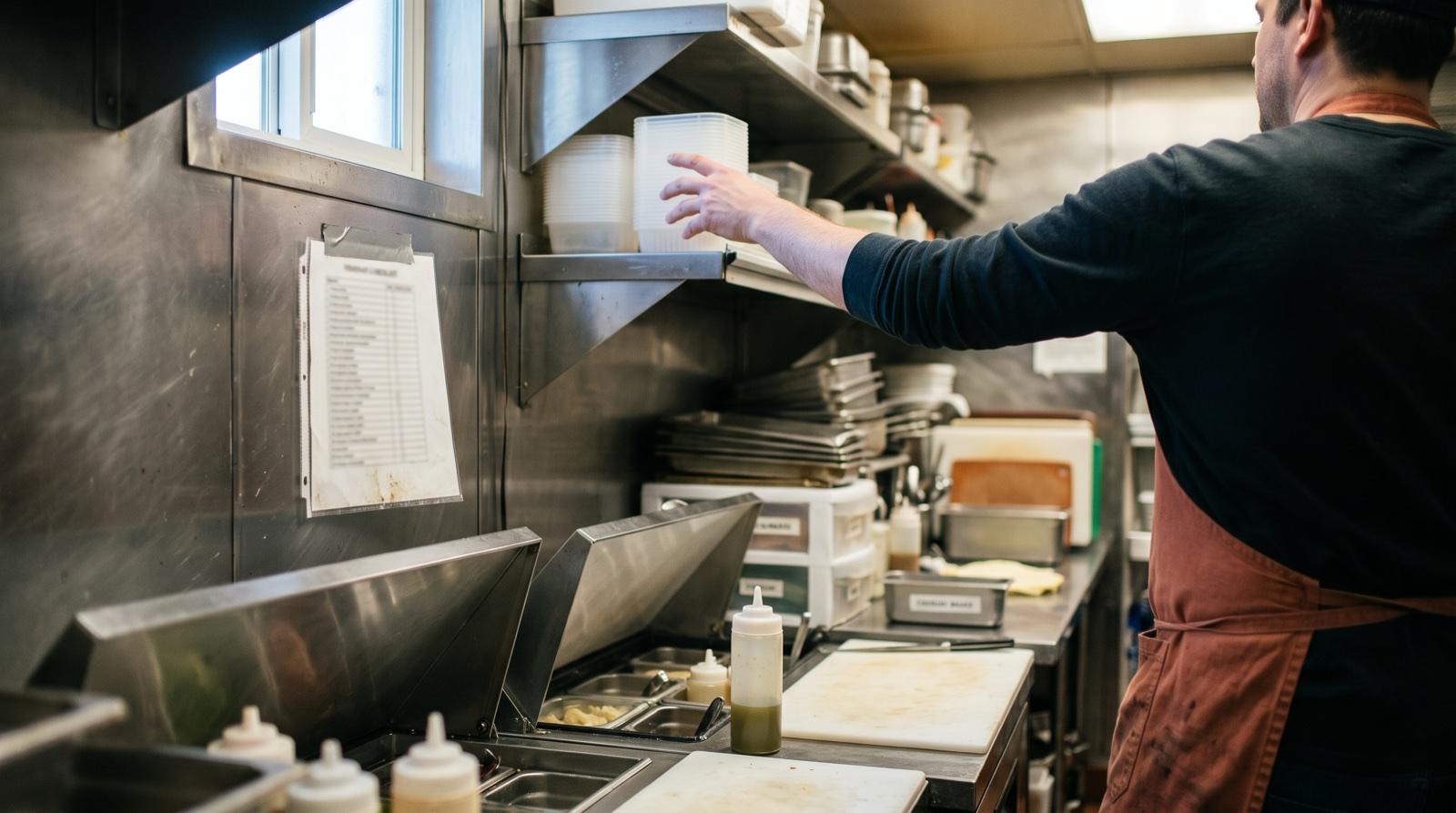
A standard operating procedure is just the way a job gets done, written down so someone else can do it the same way. What one looks like for a small business, with real examples and a one-page template.
A standard operating procedure, or SOP, is the way a job gets done, written down so someone else can do it the same way. That's it. Not a binder, not a corporate manual. A short, plain set of steps for a task your business does over and over.
If you've ever said "it's faster if I just do it myself," you need SOPs.
Why small businesses skip them
Most owners I talk to know they should write things down. They don't, for two reasons. They think an SOP has to be long and formal, and they never have a slow week to sit down and write one.
Both are fixable. A good SOP for a small business fits on one page. And you don't write it in a quiet week. You write it the next time you do the job.
I've run restaurants as a general manager and a district manager, and a pet retail district across two states. In any business with more than a couple of people, the work that's written down is the work that gets done the same way twice. Everything else depends on who showed up that day.
What an SOP actually looks like
Every useful SOP answers the same five things:
- What it's for. One line. "How we open the shop in the morning."
- Who does it. A role, not a name. "Whoever opens."
- When. "Every day, 30 minutes before we open."
- The steps. Numbered, in order, one action each.
- What done looks like. How the person knows they finished it right.
That's the whole format. If a step needs a password, a phone number, or a photo of where something goes, put it right there in the step.
Standard operating procedure examples
Here's what a few look like in real small service businesses. Each one is short on purpose.
Booking a new customer (a home services company)
- Answer within three rings, or call back within 15 minutes.
- Get the name, address, phone, and what's wrong.
- Check the schedule and offer the two soonest times.
- Book it in the scheduling tool and text the confirmation.
- Done when the customer has a confirmation text and the job is on the calendar.
Closing out a job (a cleaning or repair business)
- Take before and after photos.
- Walk the customer through what was done.
- Collect payment, or send the invoice before you leave the driveway.
- Send the review request text within 24 hours.
- Done when it's paid or invoiced, and the review request is sent.
Handling a refund request (a retail shop or studio)
- Thank them and get the receipt or order number.
- Under our limit with a receipt? Refund it. No need to ask.
- Over the limit, or no receipt? Note it and send it to the owner the same day.
- Done when the customer knows what happens next and when.
Notice what's in that last one: a limit. The point of an SOP isn't just steps. It's decisions someone else is allowed to make without calling you.
How to start without a slow week
Pick the one job you get interrupted about most. Not the hardest one, the most frequent one. The next time you do it, write down each step as you go, or record yourself on your phone talking through it. Then clean it up into the five parts above.
Have someone else do the job using only what you wrote. Wherever they get stuck, that's a missing step. Fix it and move on.
One SOP a week is plenty. In three months, the jobs that pull you in the most will run without you.
Steal this — One-page SOP template
SOP: [Name of the task]
What it's for: [One line on why this job matters]
Who does it: [Role, not a person's name]
When: [Every day at…, every new customer, every Friday…]
Steps:
- [One action]
- [One action]
- [One action]
- [One action]
- [One action]
What done looks like: [How they know it was done right]
Decisions they can make on their own: [For example: refunds under $___, rescheduling within the same week]
When to call the owner: [Only these cases]
Last updated: [Date] by [Name]
When you want help with it
If you'd rather not build these one at a time, that's what Get Organized is for. We write down how the work gets done, who decides what, and how your tools fit together, so the business runs without you in every step. It starts with a Systems Audit, $1,499 once.
Questions
What is a standard operating procedure in simple terms?
It's the way a job gets done, written down so anyone on your team can do it the same way. For a small business, one page per task is usually enough.
What should an SOP include?
What the task is for, who does it, when, the steps in order, and what done looks like. Add any limits on decisions someone can make without asking you.
How long should an SOP be?
As short as it can be while someone new can still follow it. For most small business tasks, that's a single page with five to ten steps.
Which SOPs should a small business write first?
Start with the job you get interrupted about most often, then the jobs that touch customers: booking, closing out work, and handling complaints or refunds.
If your team still has to call you to get through a normal day, book a call. I'll tell you which SOP I'd write first.
What we’re watching
Quits rose to 3.4 million in September (Bureau of Labor Statistics, JOLTS, released November 3, 2026). When someone leaves, whatever they knew leaves with them, unless it's written down.
75% of small businesses invest in training for their employees, but 45% say they don't have the time or resources to focus on them the way they'd like (Justworks and U.S. Chamber of Commerce Small Business Index, Q3 2026). A one-page SOP is about the cheapest training there is.
30% of small businesses expect to add staff in the next six months, and only 4% expect cuts (SBE Council Small Business Check Up Survey, October 2026, 516 owners). Every new hire gets up to speed faster when the job is already written down.
Written by

Greg — the operator
Restaurants and retail taught him how teams really work. Anthropology taught him to watch the people. Now he fixes how your business runs.